What Do the Next 4,000 Emoji Look Like?
Turns out, ancient scribes may have answered this question 5,000 years ago.
Turns out, ancient scribes may have answered this question 5,000 years ago.
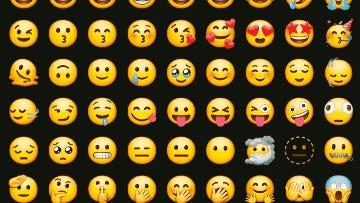
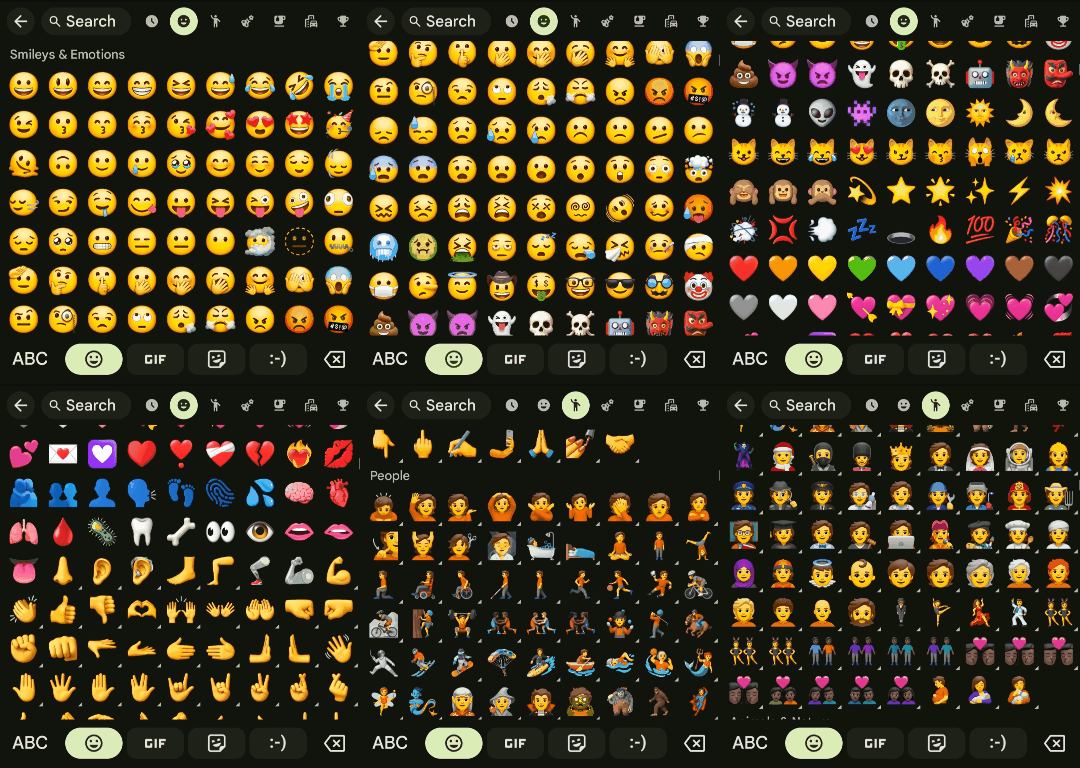
There are only so many times you can scroll past an 🫀, 🦡, 🫔, 🛴, and a 🏪 trying to find a 🏆 emoji before you give up and settle for “nice job”.
Right now, buried in our phones, sits a library of nearly four thousand tiny drawings. And yet it feels like not enough. Every year, more requests are filed for more objects, more animals, more more. If this is what four thousand emoji looks like, what are the next four thousand supposed to be?
Fortunately, thousands of years of writing systems walked 🚶➡️so emoji could run 🏃➡️. From clay slabs to touchscreens, human communication seems to follow a pattern. We start by cataloging physical objects because our brains can’t remember thirty crates of barley. Then we run out of room and stretch those pictures into metaphors. Before long, nouns aren't enough so we twist the images into mood, tone, and full-blown grammar.
👀 Sound 👀 familiar 👀 ? 👀
In 3200 BCE Mesopotamia, scribes weren't pressing reeds into mud to compose love letters or dirty jokes (yet); they were shaping clay tokens to take inventory of sheep and beer jugs to prove nobody stole a cow en route to Uruk.
Five millennia later, we faced a similar situation on mobile screens in 1999. The original 176 emoji1 were less an emotional experiment than bandwidth conservation. A sun, a train, a coffee cup: instant shorthand for the late-nineties commuter to say the day had started, they were on the train, and they needed to grab a drink. 🌞🚆☕
Then, when the Unicode Consortium standardized emoji in 2010, the list didn't stop there. Instead, people asked, “What’s missing?”
Don’t have a burrito? Add a burrito 🌯.
Don’t have a microscope? Add a microscope 🔬.
Don’t forget about hedgehogs 🦔.
Early encoding added a loaf 🍞, a baguette 🥖, a croissant 🥐, and a pretzel 🥨. Notably, once an emoji enters Unicode, it never gets removed, so we continued to carb load but the inclusion of one is the exclusion of another.
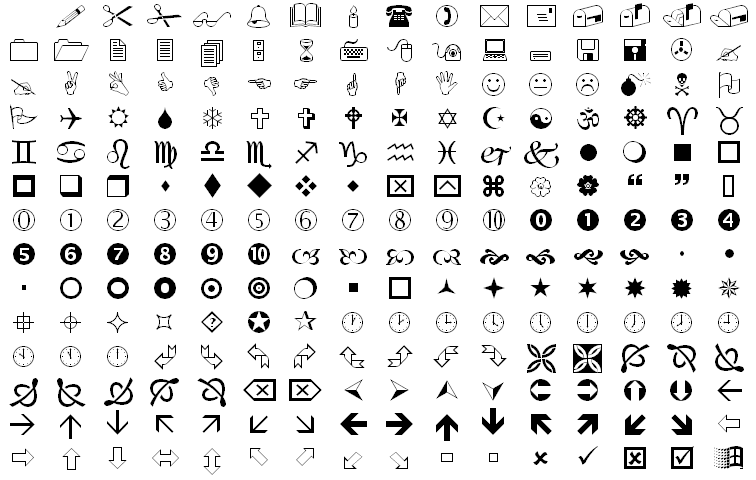
Humans are myth-makers, and our instinct to tell stories runs wild in this next phase. Scribes in Sumer and Egypt broke this noun logjam by repurposing glyphs for abstract concepts. In Sumerian, an arrow stood for “ti”, which also happened to mean ‘life.’ Egyptian scribes pulled the same trick with a sun. It started as literal sunshine, then stretched into ‘day,’ then just ‘time’ itself.
Millennia later, we run the exact same play in our group chats. We aren’t seeing an increase in the skull 💀 emoji because we are freaks for True Crime podcasts. We’re dying of laughter. We aren’t dropping clown 🤡 emoji because Barnum & Bailey is in town. As for the eggplant 🍆 and the peach 🍑? Nobody is buying groceries with these emoji.
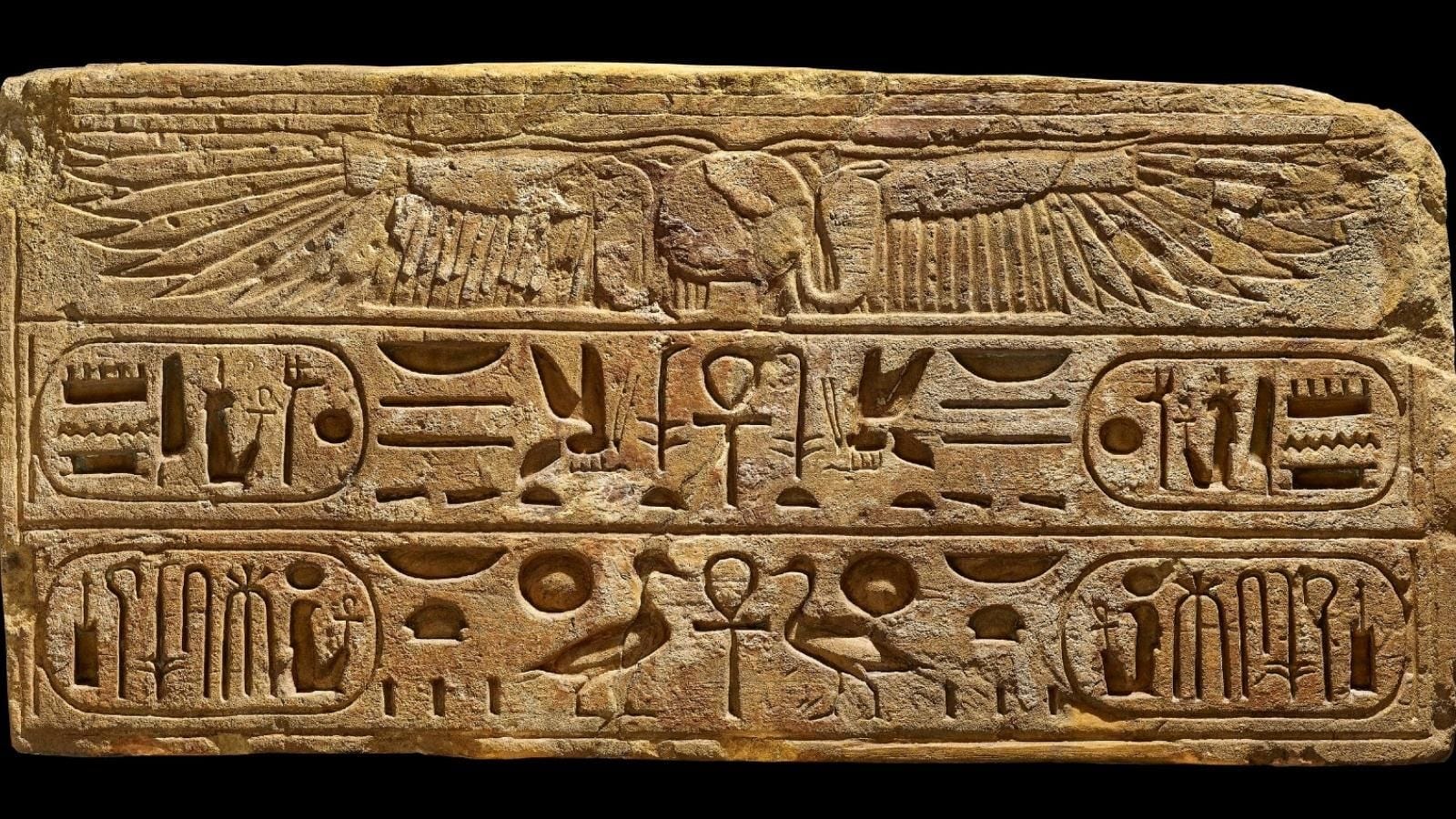
Eventually, writing systems organize ambiguity. Egyptian scribes appended determinatives, silent classifier glyphs that were never pronounced aloud, to tell the reader which conceptual category the word belonged to. Walking legs (𓂻) meant movement; a seated woman (𓁐) indicated female names.
Emoji are our modern equivalents. They sit at the edges of our sentences to establish tone and clarify our intent. Take a sentence as volatile as, "I'm going to kill you." Standalone, I’m calling the police. Tack on a loudly of cryingface like, “I'm going to kill you 😭” and now we’re both laughing. Add a wink, “I'm going to kill you 😉” and blood rushes to my face, you flirt. One tiny pictograph completely changes the legal classification of the message.
We treat them like volume knobs, stacking flames to crank up the heat (🔥 vs.🔥🔥🔥🔥) and we reach for messy, hard-to-name gut feelings like Melting Face (🫠), Saluting Face (🫡), or Holding Back Tears (🥹) because words … fail me.
When someone drops 💀 under a video, your brain doesn’t sound out s-k-u-l-l. Depending on the context, you might think, “I’m dead,” “unhinged,” or simply a silent, physical exhale of amusement. It dumps the meaning straight into your skull. How do you pronounce these in your head? As words … or as tone?
You are amazing 🔥 → Sincere hype.
You are amazing 🔥🔥🔥🔥 → With great enthusiasm.
🔥 you 🔥 are 🔥 amazing 🔥 → Rhythmic emphasizing cadence.
You are amazing 🏆🎆✨🔥💪🤩💅 → Pure expressive exuberance.
You 🫶 are ✨ amazing ✨🎆🍆💦💦💦🦪🥵🏆 → Horny, chaos mode.
Emoji aren’t a language you can speak with your voice, and yet they give us a voice. They are the facial twitches and raised eyebrows that flat text stripped out of speech. They shrug, smirk, lean in, and give us a look up and down so that horny text doesn’t have to do it alone.
If the last five thousand years of writing has taught us anything, it’s that emoji won't mature by stuffing 4,000 more noun buttons into an already bloated keyboard. It moves forward through flexible visual modifiers and tone ligatures that combine on the fly. While speculative, my mind wanders to…… …. .
Scribes figured out five thousand years ago that you can't carve the entire world onto a rock. Mesopotamia did not draw every type of sheep. Egypt did not draw every fish in the Nile. Their systems survived because people quit counting livestock and started snapping pieces together to build weird, ambitious ideas. I hope we can usher that next era in for emoji. Until then, there's always emoji kitchen⛲
Note: 11/6/2026 Some typos and hyphenation has been corrected since publishing. I regret these errors. 🫥
Contrary to popular belief “e-moji” doesn’t mean “emo-tional”. It’s a Japanese word that literally translates into “picture character” (絵文字).
Texto de jenniferdaniel.substack.com tal como lo publicó, leído de su página y mostrado aquí con el formato de El Autómata. El original, en jenniferdaniel.substack.com · Volver a la noticia de El Autómata