Chip Builder: learn how chips are built · chipbuilder.org · El Autómata
Lunes, 16 de noviembre de 2026
Portada de las 22:25
Todos los periódicos y la radio, en unoEscrito por IA a partir de Hacker News · Cómo se hace
Hacker News
chipbuilder.org · texto original
Chip Builder: learn how chips are built
Chip Builder is a story-driven puzzle game about digital logic by bitheap GmbH. Learn how chips are built: wire transistors into gates, gates into adders and memory, and memory into a working CPU you program yourself. Then take your design to the fab, design an AI chip, and run ChipCorp itself as its CEO.
Developed and published by bitheap GmbH, Zürich, Switzerland. For Windows, macOS and Linux. Rated PEGI 3 and ESRB Everyone.
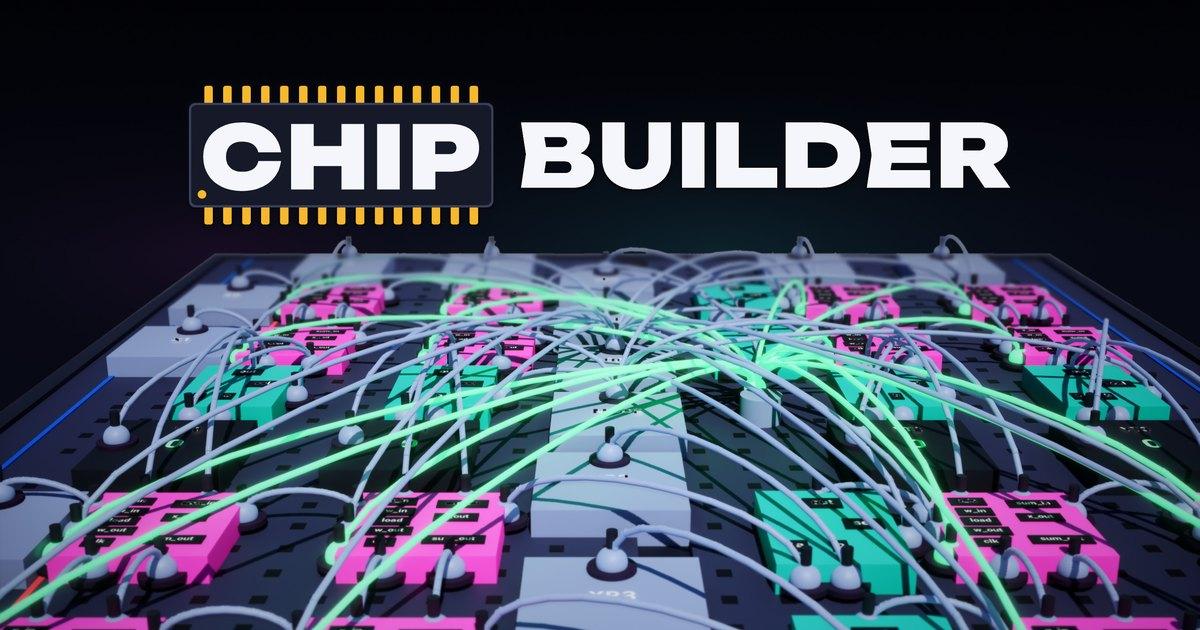
Fig. 1A live circuit from chapter 10, the game's key art.
How chips are built
Step 1 of 10
It starts with sand.
Quartz sand is silicon dioxide: one silicon atom bound to two of oxygen. Silicon is the second most common element in Earth's crust, and it is a semiconductor, which is exactly what a chip needs.
Step 2 of 10
Purify it, then melt it.
Carbon strips the oxygen away in an arc furnace, and chemical refining takes the silicon to electronic grade: 99.9999999 % pure, about one stray atom in a billion. Then it melts in a quartz crucible.
Step 3 of 10
Pull one crystal.
A small seed crystal touches the melt and is drawn upward while it turns. Atoms freeze onto it in a single unbroken lattice, growing a cylinder up to 300 millimetres across and two metres long. This is the Czochralski process.
Step 4 of 10
Slice it into wafers.
Diamond wire saws cut the ingot into discs under a millimetre thick. Each one is ground, polished to a mirror and cleaned until it is flatter than anything you have ever touched.
Step 5 of 10
Draw the circuit with light.
A light-sensitive coating goes on. Ultraviolet light shines through a mask that holds the pattern of one layer, and a lens shrinks it four times onto the wafer, die after die. The newest machines use extreme ultraviolet light.
Step 6 of 10
Etch, dope, deposit. Repeat.
Exposed areas are etched away. Ions are shot into the silicon to turn plain crystal into transistor regions. Thin films of insulator and metal are laid on top. Layer after layer: more than a thousand steps over about three months.
Step 7 of 10
Probe every die.
The finished wafer carries hundreds of identical chips, called dies. Needle-thin probes touch each one and run it through its tests. The ones that fail are mapped and later thrown away; the share that passes is the yield.
Step 8 of 10
Cut, bond, seal.
The wafer is diced. Each good die is set on a substrate, joined through tiny solder bumps, and closed under a lid that carries heat out and signals in. Modern chips stack several dies in three dimensions.
Step 9 of 10
And that is a chip.
Billions of transistors on a few square centimetres of silicon, each one a switch that started as a grain of sand.
Step 10 of 10
Now it is your turn.
In Chip Builder you design what goes on the die: transistors into gates, gates into a CPU. Then, in chapter 9, you take it through the fab yourself, from wafer to packaged chip.
Fig. 2.1Quartz sand is silicon dioxide, SiO₂.Fig. 2.2Silicon melts at 1414 °C. Electronic grade is 99.9999999 % pure.Fig. 2.3The Czochralski process grows ingots up to 300 mm across.Fig. 2.4A standard 300 mm wafer is 775 µm thick.Fig. 2.5Extreme ultraviolet light has a wavelength of 13.5 nm.Fig. 2.6More than a thousand process steps over about three months.Fig. 2.7Wafer probing. The share of good dies is the yield.Fig. 2.8Die, bumps, substrate and lid. Modern parts stack dies in three dimensions.Fig. 2.9Billions of transistors, each one once a grain of sand.Fig. 2.10Chapter 9 of the game, From Sand to Silicon.
Developer and publisherbitheap GmbH, Zürich, Switzerland
Trailer
See Chip Builder in action
From a single switch to running the whole company, in under six minutes.
The story
Day one at ChipCorp
You have just badged into the Logic Design Lab as a junior engineer at ChipCorp. Your mentor, Dr. Ada Chen, has one goal for you: build a working CPU with your own hands, starting from a single switch.
Over the following months you move through ChipCorp's labs, from arithmetic and sequential logic to memory engineering and the ALU testing chamber. Each lab adds a new layer to the machine you are building, until the diagrams on Dr. Chen's whiteboard become a working CPU, and then a real chip. Then the board calls, and you run ChipCorp itself.
Fig. 3A level briefing in the Logic Design Lab.
Chapters
12 chapters, from transistor to chip
Each chapter is a lab at ChipCorp. Each level teaches exactly one new idea, and it stays with you because you built it yourself.
Chapter 0
Silicon & Switches
Build logic out of the only thing a chip really has: transistors.
Chapter 1
The Spark of Logic
The gates that process 0s and 1s.
Chapter 2
The Art of Combination
Adders, multiplexers and decoders.
Chapter 3
Memory Takes Hold
Latches, flip-flops and registers.
Chapter 4
The Storage Vault
RAM, ROM and address decoding.
Chapter 5
The Brain's Calculator
The ALU, the arithmetic and logic powerhouse of the CPU.
Chapter 6
Building the Brain
Program counter, control unit and datapath.
Chapter 7
The Language of Machines
Machine code, assembly and algorithms.
Chapter 8
The Chip Architect
Pipelining, caching and ISA design.
Chapter 9
From Sand to Silicon
Manufacture the chip you designed.
Chapter 10
The AI Accelerator
MAC cells, small numbers and the systolic grid behind AI chips.
Chapter 11
FAB CEO
Run ChipCorp itself for 35 years, one week at a time: a turn-based strategy game.
Screenshots
On the bench
Screenshots from the game. Click one to enlarge.
01 / 10
ChipCorp's island in FAB CEO, the turn-based strategy chapter
Get the game
Get Chip Builder
All 12 chapters and 49 levels, for Windows, macOS and Linux. Wire your first gate today.