Even cacti are severely threatened in a warmer, drier world · Phys.org · El Autómata
Lunes, 16 de noviembre de 2026
Portada de las 21:20
Todos los periódicos y la radio, en unoEscrito por IA a partir de 26 medios · Cómo se hace
Biología y genética
Phys.org · texto original · Plants & Animals
Even cacti are severely threatened in a warmer, drier world
Findings from a study spanning the Americas show that climate change forecasts are underestimating threats to biodiversity—even to exceptionally resilient species—by not factoring in extreme weather events that become more likely in a warmer world.
Foto: vía Phys.org
University of Arizona · Phys.orgPublicado 11 nov, 17:00Ver en phys.org
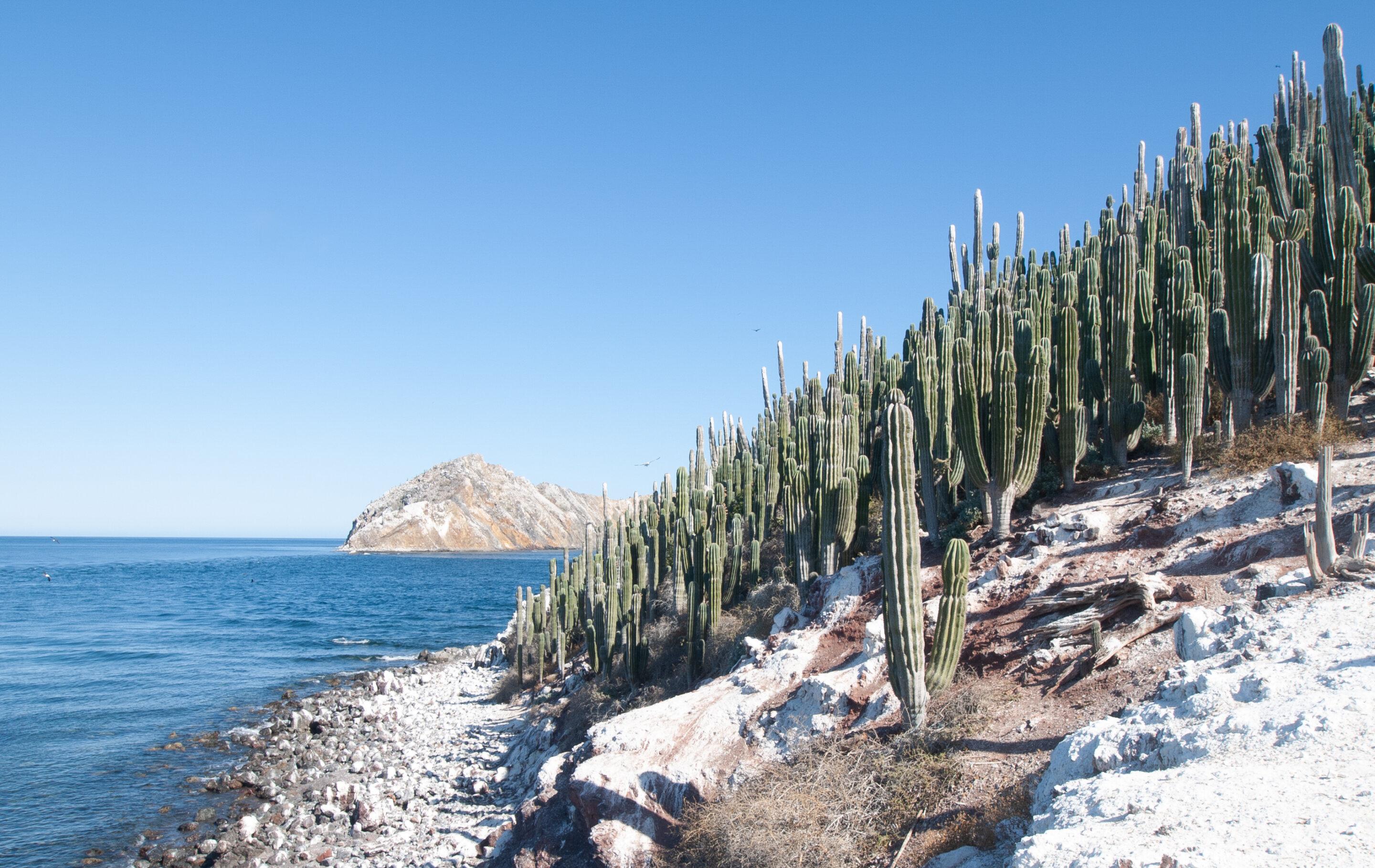
A dense forest of Mexican giant cardón cacti (Pachycereus pringlei) crowds the shore of a small, uninhabited island in Mexico's Gulf of California. Credit: Daniel Stolte
New research published in Nature reveals a dramatic decline in suitable habitat for the majority of nearly 1,000 cactus species studied when incorporating severe drought data into existing climate distribution models.
An international team led by researchers at the University of Arizona and the University of South Florida found that more than a quarter of cactus species analyzed could lose at least 80% of their suitable habitat by the end of the century. Projected diversity declines could be especially severe in important cactus diversity hot spots like Chile, Peru and northeastern Brazil.
This level of loss could qualify these cactus species as critically endangered, according to criteria established by the International Union for Conservation of Nature, which would more than double the number of species currently in this category.
Extreme weather changes biodiversity forecasts
One of the great challenges in biodiversity science is predicting how life on Earth will respond to a changing climate, according to Brian Enquist, a plant ecology professor at the U of A and senior author on the study.
During late spring and early summer, prickly pear flowers dapple the landscape with color in the Sonoran Desert near Tucson, Arizona, U.S. Credit: Daniel Stolte
"For decades, we have relied on average temperature and precipitation to understand how species will be impacted by changing climate and who will likely persist," he said. "But organisms do not experience averages alone. They must also survive the extremes. Our study shows that accounting for these extremes can fundamentally change how we assess the future of biodiversity."
The authors suggest similar impacts will be seen in many other plant groups when accounting for extreme weather events with future climate scenarios.
"Climate change makes extreme events more frequent, but such events are typically excluded from large-scale forecasts," said the study's lead author, Michiel Pillet, who did the work as part of his dissertation at the U of A and is now a postdoctoral researcher at USF.
"For this study, we integrated severe drought projections into models, which is quite novel, and extrapolated that at large scales with a plant family that is adapted to drought conditions. Our findings indicate that these adaptations may not be sufficient in a future with longer and more intense droughts."
Conventional distribution models typically rely on long-term temperature and rainfall averages but fail to capture the damaging effects of extreme events such as droughts, hurricanes and cold snaps on biodiversity. By incorporating newly available global data on future droughts with records from biodiversity databases, field observations and the community science network iNaturalist, researchers were able to improve predictions of future impacts.
Saguaro cacti in the Sonoran Desert are experiencing reproductive failures and mortality due to severe drought. The effects are made worse by invasive grasses, which outcompete small plants and increase the frequency of fires. Credit: Ronald Souder
Drought tests cacti's survival strategies
While cacti are icons of desert environments, they inhabit nearly all types of ecosystems across the Americas, from California to Florida, and from Canada to the southern stretches of South America. More than 30% of cactus species are already threatened with extinction, particularly from habitat destruction and poaching.
Research published in 2022 by Pillet and Enquist already showed that climate change will elevate this number, but the addition of severe drought vastly increases how much suitable area species stand to lose.
"Cacti have evolved an astonishing range of forms and strategies that allow them to persist in some of the driest environments on the planet," Enquist said, explaining that impacts of severe drought are already visible in the Southwest, including Arizona, "with large-scale mortality of chollas, prickly pears and even the mighty saguaro."
"Droughts in the last few years have contributed to stunted saguaro growth and reproduction and killed many plants in some areas," Pillet added. "These effects also impact the many animal species that rely on these cacti for habitat and food."
Sharper forecasts for conservation assessments
The research was informed by a cadre of scientists across the Americas, including in Chile, Peru, Mexico and Cuba, and from institutions including the Desert Botanical Garden, Conservation International and the IUCN Cactus and Succulent Plants Specialist Group. The study was aided by additional data from iNaturalist.
"What we are seeing on the ground are some cactus populations that are already experiencing reductions in habitat and nearing extinction risks due to this combination of climate and extreme events," said Pablo Guerrero, a professor of botany at the Universidad de Concepción in Chile and co-author of the study.
"The data and modeling allow us to reveal the extent of this surprising development across geographic scale and hopefully inform how we proceed in conserving and protecting what we can."
"Though these forecasts are for the end of the century, it is important to note we are already seeing impacts that are limiting plant ranges today," Pillet said. "Our results will inform updated IUCN Red List conservation assessments, and we expect the outlook for cacti will be grim, especially when our projections are combined with ongoing threats of habitat destruction and illegal collection."
Bachelor's in mathematical biology, Master's in creative writing. Well-traveled with unique perspectives on science and language.
Full profile →
Citation:
Even cacti are severely threatened in a warmer, drier world (2026, November 11)
retrieved 16 November 2026
from https://phys.org/news/2026-11-cacti-severely-threatened-warmer-drier.html
This document is subject to copyright. Apart from any fair dealing for the purpose of private study or research, no
part may be reproduced without the written permission. The content is provided for information purposes only.