A Cellular Trio Drives Pancreatic Cancer-Associated Cachexia
Crosstalk between subpopulations of pancreatic cancer cells, macrophages, and fibroblasts contribute to the wasting syndrome and may help identify biomarkers for the condition.
Crosstalk between subpopulations of pancreatic cancer cells, macrophages, and fibroblasts contribute to the wasting syndrome and may help identify biomarkers for the condition.
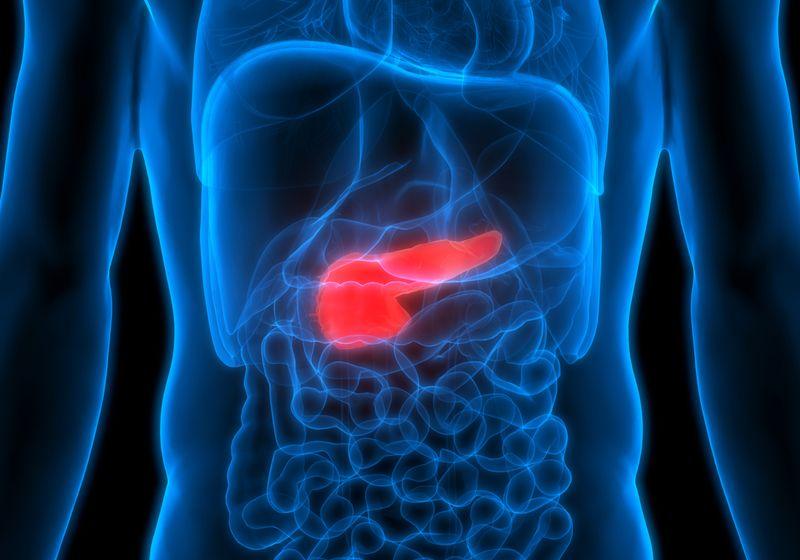
Researchers recently showed how specific subpopulations of cancer cells, tumor-associated fibroblasts, and macrophages interact to drive cachexia in pancreatic cancer.
Image credit:©iStock.com, magicmine
Cancer is a devastating disease in itself, but it can also lead to another debilitating syndrome: cachexia. Cancer-induced cachexia causes patients to lack appetite and lose significant amounts of body weight and muscle mass.
Min Li, a cancer researcher at the University of Oklahoma, has been studying this cancer-associated condition for more than two decades. In particular, he’s focused on the association between cachexia and pancreatic cancer. More than 80 percent of people with pancreatic cancer develop the wasting syndrome, which impacts their tolerance to treatment and survival rates.1,2
In a recent study, Li and his team analyzed patient samples and used a mouse model to better understand the cellular interplay driving the progression of cachexia in pancreatic cancer. They identified subpopulations of pancreatic cancer cells, macrophages, and cancer-associated fibroblasts (CAFs) that work together to drive cachexia development.3 The findings, published in Cell, pinpoint three key players involved in pancreatic cancer-induced cachexia that may help identify patients likely to develop the wasting syndrome before they reach a hard-to-reverse stage of weakness and weight loss.
“Most mechanistic work has been done in advanced disease, which informs us about the end state rather than about the onset of cachexia,” said Tobias Janowitz, a biochemist and medical oncologist at Cold Spring Harbor Laboratory who was not involved in the new study. “The reported effect on muscle is separable from tumor burden, which is the kind of observation the field requires if cachexia is to be treated as a target.”
Continue reading below...
Latest science news stories
Topic-tailored resources and events
Customized newsletter content
SubscribeIn previous work, Li and his colleagues had shown that pancreatic cancer cells induce muscle loss and require macrophages in the tumor microenvironment to trigger cachexia.4,5 While the crosstalk between macrophages, CAFs, and cancer cells is essential in cancer-associated cachexia, Li explained that these cell populations consist of a mixture of subpopulations that may or may not contribute to the wasting syndrome.
In the new study, Li’s team sought to uncover the identities of these cell subgroups and how they affected the progression of the syndrome. The researchers combined high-throughput sequencing methods, including single-cell and spatial transcriptomics, to analyze tumor, muscle, and blood samples from 43 patients with pancreatic cancer. “This [sample collection] is demanding, and it is the appropriate design for a condition that progresses and is systemic rather than local,” Janowitz said, praising the study authors’ effort. The patients were classified as non-cachectic, pre-cachectic, and cachectic based on their body-weight loss preceding their cancer diagnosis and their level of appetite.
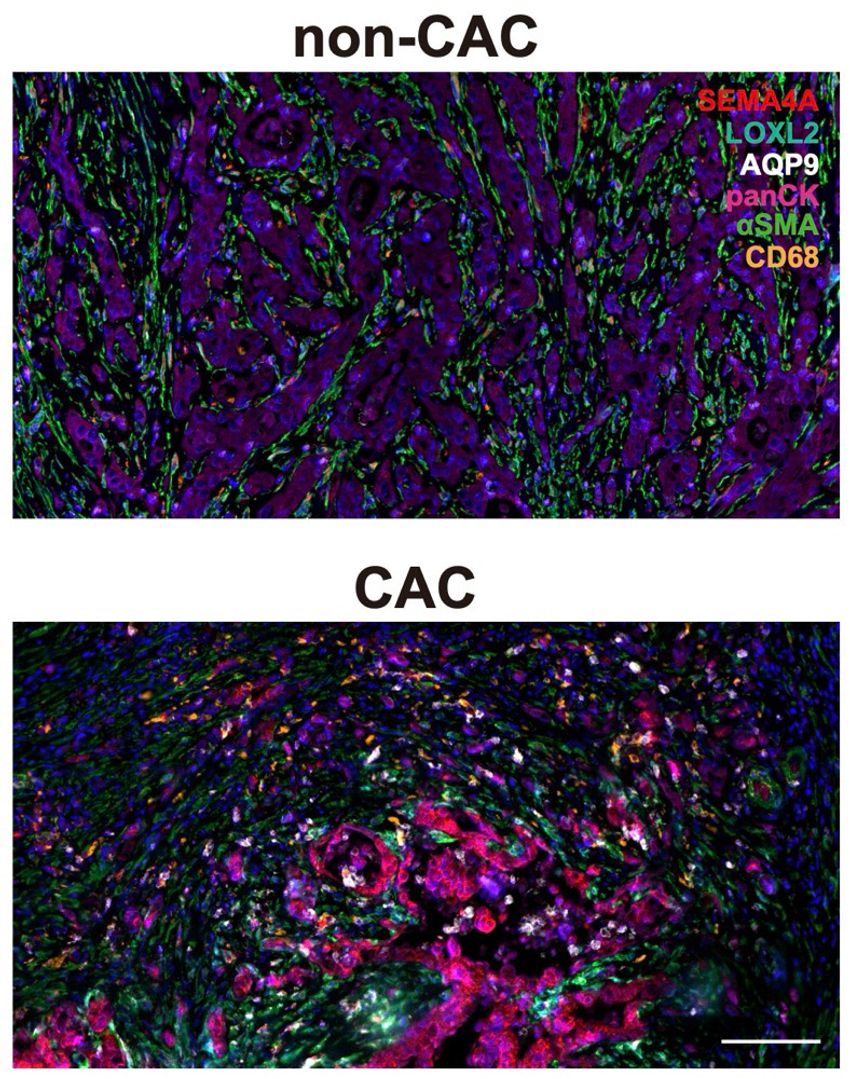
By comparing tumor samples from non-cachectic, pre-cachectic, and cachectic patients, researchers uncovered a triad of cell subpopulations that work together to drive cachexia in pancreatic cancer.
Min Li lab, CC BY 4.0
Li noted that, when the project started nearly two years ago, not all the necessary samples were available for the study. “I made a lot of phone calls, and, fortunately, [lots] of good, supportive colleagues were willing to help us,” said Li, adding that having access to these additional samples was key to providing enough statistical power for their group comparisons.
By comparing the cell profiles of non-cachectic, pre-cachectic, and cachectic patients, the team showed that each stage was associated with a distinct tumor microenvironment composition. In patients with the syndrome, the researchers identified enrichment of a specific subpopulation of pancreatic cancer cells. In mice, implantation of tumors lacking these cancer cells attenuated the muscle loss induced by the tumor, suggesting that this cancer subpopulation drives muscle wasting.
Further analyses showed enrichment of a CAF subgroup and a specific macrophage subpopulation in the cachectic patient samples. In vivo and in vitro experiments then revealed that the effects of cancer cells on muscle mass depended on the presence of these CAFs- and macrophage-specific subpopulations. A closer look at these subclusters revealed a strong association between the fibroblasts and macrophages in both pre-cachectic and cachectic samples. This suggests that these subclusters play a role in cachexia progression and could serve as markers to identify patients at higher risk of developing the syndrome.
Computational analysis of the ligand-receptor interactions among the macrophage and CAF subpopulations also suggested that the immune cells promote CAFs’ activation, which, in turn, is key to driving the muscle-wasting effects of cancer cells. What’s more, spatial analyses of the patient samples revealed that these subclusters of macrophages, cancer cells, and CAFs colocalized within the tumor, creating niches that are associated with wasting syndrome progression.
Continue reading below...
To Janowitz, the fact that the study looked at different syndrome stages by comparing non-cachectic, pre-cachectic, and cachectic patients was “an important contribution.” He added that the field needs more studies like this one.
As a next step, Li plans to examine other cachexia-associated cancers and compare them to non-cachexia-related cancers to identify the molecular underpinnings that differentiate the two. He and his team also plan to apply similar high-throughput approaches to dissect the features that may be unique to each cachexia cancer.
“I'm very excited. My students and colleagues are very excited,” said Li. “We try to learn from the knowledge we get from analyzing those clinical samples to better serve patients with cancer cachexia syndrome.”
Texto de The Scientist tal como lo publicó, leído de su página y mostrado aquí con el formato de El Autómata. El original, en the-scientist.com · Volver a la noticia de El Autómata